November 6, 2006

Amyraut and Ordered Decretalism

Here’s what Brian Armstrong says about Amyraut and lapsarian speculations:
One of Amyraut’s favorite criticisms of orthodox theologians was of their metaphysical speculations, which he apparently felt resulted from their methodology. He was fond of emphasizing Calvin’s principle that God’s essence is incomprehensible for rational man, that “Men who . . . resolve to seek out what God is are but merely amusing themselves with insipid speculation.” In particular, Calvin cautioned that this principle must be applied in any consideration of the decree of election; it can be a source of consolation only if man begins with faith rather than the counsel of God. He says:
The election of God will be a fatal labyrinth for anyone who does not follow the clear road of faith. Thus, so that we may be confident of remission of sins, so that our consciences may rest in full confidence of eternal life, so that we may boldly call God our Father, under no circumstances must we begin by asking what God decreed concerning us before the world began. Rather we must begin by seeking what through His paternal love He has revealed to us through the Gospel. We must seek nothing more profound than that we become the sons of God.
Amyraut considered the orthodox doctrine of predestination, with all its speculation about the order of God’s decrees, an outright denial of this principle, and constantly called on Calvin in his desire to correct this orthodox tendency. Concerning the ordering of the decrees he makes the following incisive judgment:
... I am well aware that Calvin has said many things relating to the "impulsive" causes of the decrees of God, but as to their order I do not see that he has ever said a word. Why God has created man for hope of perpetual blessedness, he states that the only reason for this is His goodness. Why, man having fallen into sin and condemnation, God willed to send His son into the world to redeem men by His death, Calvin states that the only reason for this is an admirable love of God for mankind. Why He has elected some and passed by others in imparting the grace of faith, Calvin states that the only reason for this is the mercy and severity of God. Why God has preferred one individual to another in the distribution of this grace, Calvin does not recognize any other reason than solely the perfectly free will of God. Why He has willed to save believers and to condemn unbelievers unto eternal punishment, Calvin has thought that the reason for the latter must be taken from the justice of God whereas the reason for the former must be taken from His mercy...But what has been the order according to which God has arranged all these things in His eternal wisdom, when it is a question of His having proposed of thinking or willing what comes first or last, Calvin has never explained this nor has he the least interest in doing so.
Amyraut goes on to say that this order in the decrees is a matter in which the "secrets are so profound, and the abyss so impossible to explore, that whoever will undertake to know them would necessarily be swallowed up by them or will necessarily remain eternally deluded as being in a completely inexplicable labyrinth." Nor, he continues, has the Spirit of God furnished and light on this matter in the Word.
Brian Armstrong, Calvinism and the Amyraut Heresy (Eugene, OR: Wipf and Stock Publishers, 2004), 162–164.

John Quick reports what the Amyraldian party said before a French Synod (probably Alencon) this way:
2) As to making distinct decrees in the council of God, the first of which is to save all men, through Jesus Christ, if they shall believe in him, the second to give faith unto some particular persons, Amyraut, along with Testard, declared, that they did this upon no other account than of accommodating it unto that manner and order which the spirit of man observeth in his reasonings for the succour of his own infirmity; they otherwise believing, that though they considered this decree as diverse, yet it was formed in God in one and the self-same moment, without any succession of thought or order of priority and posteriority.
John Quick, Synodicon in Gallia Reformata (London: Printed for T. Parkhurst and J. Robinson, 1692), 2:355.

If one wants to understand what Amyraut said about the decrees and their ordering, don't consult unreliable secondary sources that perpetuate a mythological Amyraut instead of the authentic Amyraut. Since there is only one of his works translated into english (his Brief Treatise on Predestination translated by Richard Lum in 1985 in partial fulfillment of his doctoral degree at Dallas Theological Seminary), he is severely misunderstood and misrepresented. If one wishes to research the man and his thought, consult those that have dealt with the primary sources and cite them carefully.

Incidentally, R. L. Dabney and Herman Bavinck are other examples of Reformed men who have been critical of the tendency to speculate about the order of the decrees. Both of them rejected lapsarianism.

See the following posts for more about Amyraut's views:

Nicole Quoting Quick

Paul Testard's Dualism

These two posts should help to dispel the myth that Amyraut argued that Christ died for all equally, without any qualifications. Too many are eager to erect this straw man in their arguments. On the contrary, Amyaut taught that the death of Christ was equally for all, but that Christ died unequally for all. In other words, there is no limitation in the death itself or the imputation of sin to Christ (it's equally sufficient to save all sinners), but there is a limit in Christ's intentions in suffering such an all-sufficient death. He wholeheartedly affirmed the classic understanding of Christ suffering sufficiently for all (the general intent), but especially for the elect (which is the special intent).

If someone wants to call you an "Amyraldian" for holding a dualistic view, ask them why they are not calling you a "Calvinist." After all, Amyraut was echoing Calvin's views regarding Christ's satisfaction. Here's the dirty little secret: They are calling you an "Amyraldian" because they aren't even interpreting Calvin correctly and they want to alienate you from Reformed/Calvinistic circles. Instead of engaging Calvin's own categories as presented in the primary sources, they just tell you to consult their "experts." When someone calls me an Amyraldian, I just say "I am an Amyraldian in so far as he agrees with Calvin." :-) Or, I could say, "I am an Amyraldian in so far as he agrees with Calvin, Musculus, Bullinger, Zwingli, Ursinus, Ussher, Cameron, Davenant, Polhill, Baxter, Martinius, Calamy, Vines, Seaman, Arrowsmith, Preston, Watts, Marshall, Howe, Bunyan, Ryle, Dabney, Shedd, C. Hodge, Kuiper..." and on and on it goes. I might also add EVERY OTHER CHRISTIAN THAT LIVED PRIOR TO BEZA, with the exception of Gottschalk.
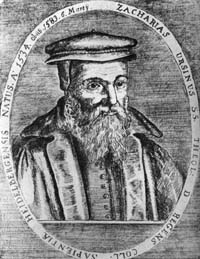

The Heidelberg Catechism and Zacharias Ursinus (1534–1583) on Christ's Death and the Will of God

The Heidelberg Catechism on Question 37 says:
37. Q. What do you confess when you say that He suffered?

A. During all the time He lived on earth, but especially at the end, Christ bore in body and soul the wrath of God against the sin of the whole human race. Thus, by His suffering, as the only atoning sacrifice, He has redeemed our body and soul from everlasting damnation, and obtained for us the grace of God, righteousness, and eternal life.

Zacharias Ursinus (1534–1583), in his commentary on the Heidelberg Catechism, said:
Question: “If Christ made a satisfaction for all, then all ought to be saved. But all are not saved. Therefore he did not make a perfect satisfaction.”

Answer: “Christ satisfied for all, as it respects the sufficiency of the satisfaction which he hath made, but not as it respects the application thereof.” (HC commentary, p. 215.)


Here are a few more quotes from Ursinus:
God willeth that all be saved, as he is delighted with the salvation of all...[and] inasmuch as he inviteth all to repentance: but he will not have all saved, in respect of the force and efficacy of calling. Ursinus, The Summe, p. 353.
Quoted in G. Michael Thomas, The Extent of the Atonement: A Dilemma for Reformed Theology from Calvin to the Consensus (1536–1675) (Carlisle: Paternoster, 1997), 110.
He satisfied for all regarding satisfaction, but not with respect to application. The Summe, pp. 131–132.
Thomas, The Extent of the Atonement, 111.
The cause why all are not saved by Christ, is not the insufficiency of the merit and grace of Christ (for Christ is the full propitiatory sacrifice for the sinnes of the whole world, as concerning the worth and sufficiency of the ransome and price which he paid) but it is the infidelity of men, whereby they refuse the benefits of Christ offered in the Gospel...
Thomas, The Extent of the Atonement, 111.
Christ was ordained by God the Father...to offer himself a sacrifice propitiatory for the sins of all mankinde...and lastly to apply effectually his sacrifice unto us...by enlightening and moving the elect. The Summe, pp. 116–117.
Thomas, The Extent of the Atonement, 111.

Thomas comments on Ursinus:
Ursinus' double-sided doctrine of the extent of the atonement resembles Bullinger's position, as does his use of the conditional covenant theme. It also bears a strong resemblance to that of the Bernese theologian Wolfgang Musculus (1497–1563).
Thomas, The Extent of the Atonement, 112.

R. L. Dabney (1820–1898) on the Westminster Confession and Commercialism

Again, the Confession asserts with most positive precision the penal substitution of Christ, the imputation of our guilt to him, his punitive sufferings and sacrifice therefore, and the imputation of this satisfaction to all believers for their justification. It holds fast to the truth of particular redemption. Yet it carefully avoids implying any limitation upon the infinite value and merit of Christ's sacrifice. It carefully avoids confusing the two concepts of legal satisfaction for guilt with the consequent at-one-ment, or reconciliation, for the believing sinner. And it gives no countenance to the quid-pro-quo [tit for tat] theory of expiation, which affects, with a mischievous over-refinement, to affix a commercial ratio between the sins of the elect and the one indivisible and infinite merit of the divine sacrifice.
R. L. Dabney, "The Doctrinal Contents of the Westminster Confession of Faith," in Discussions (Harrisonburg: Sprinkle Publications, 1999), 5:130.

Bio:  
Wiki

John Howe (1630–1705) on Blood Guiltiness and the Redeemer’s Death

(2.) But we are further to persuade this reconciliation to God, from the way wherein our Lord effects it: "in the body of his flesh, through death," or by dying a sacrifice upon the cross. And now you know this, will ye not yet be reconciled to him? Consider,

[1.] You will herein frustrate, and make insignificant to yourself, the highest demonstration that could be given of God’s good-will towards you. "God so loved the world," &c. John iii. 16. And what could our Lord himself have done more to testify his own love? "For greater love hath no man than to lay down his life for his friends," John xv. 13. Yea, for those that were not so before, but wicked enemies; only that thereby they might be made friends, Rom. v. 8. And what could it signify to you, to represent the divine love to you by so costly a demonstration, if it do not gain your love?

[2.] And what could be so apt a means, sinner, to break thy heart, and conquer all thy former enmity, as to behold thy Redeemer dying upon the cross for thee? "They shall look upon me whom they have pierced, and mourn," Zech. xii. 10. "And I, if I be lift up, will draw all men to me;" which our Lord said, signifying what death he should die, by being lift up on the cross, John xii. 32, 33. Now what dost thou think of thyself, if such a sight will not move thee? An earthly, carnal, worldly mind, is declared over and over to be enmity against God, Rom. viii. 7. James iv. 4. But how remarkable is it, that such a temper of mind should be so peculiarly signified to import enmity to the cross of Christ! Phil. iii. 18, 19. I tell you of such, weeping, saith the apostle, that do even continue their enmity even in the face of the cross! And who even by that itself are not overcome!

[3.] If thou wilt not be reconciled, Christ did, as to thee, die in vain; thou canst be nothing the better. Think what it must come to, that so precious blood, (infinitely exceeding the value of all corruptible things; silver and gold, &c. 1 Pet. i. 18, 19,) should be shed, to redeem and save such as thou, and yet do thee no good?

[4.] If thou continue to the last unreconciled, it not only doth thee no good, but it must cry, and plead, most terribly against thee. Blood guiltiness is a fearful thing! What must it be, to be guilty of such blood! If thou wert guilty of the blood of thy father, thy child, or of the wife of thy bosom, how would it astonish thee! But to be guilty of the blood of the Son of God! How canst thou live under it? If thou wert guilty of all the innocent blood that ever was shed since the creation of the world, it were not comparable to the guilt of this blood!
John Howe, “Of Reconcilation Between God and Man,” in The Works of John Howe, 3 vols. (Morgan, PA: Soli Deo Gloria, 1990), 1:459–460.

Bio:
Wiki
DNB

November 5, 2006

John Howe (1630–1705) Exhorting Unbelievers

You cannot please him, because the bent of your carnal mind lies cross to his saving design; you are enemies in your mind to him, for your mind is most opposite to his mind; he is for saving you, you are for self-destruction; you hate him, as you love death, Prov. viii. 36. Therefore also they that love this world, the love of the Father is not in them, I John ii. 15. He would have them do his will, and abide in a blessed state for ever; but while they love this world, their hearts are set upon a vanishing thing; for the world and the lust thereof must pass away and be gone, v. 17. They cannot love him, while in mind, and will, and design, they so little agree with him. And hereupon is the friendship of this world said to be enmity against God, and he that will be a friend of this world, makes himself an enemy to God, James iv. 4. The design of his amity with you is disappointed and lost, therefore he can look upon you no otherwise than as enemies to him.

And now, if this be the temper of your mind and spirit, how easily, by looking into your own hearts, might you discern it? "Know you not your ownselves?" 2 Cor. xiii. 5. As if it were said, it is a reproach to be ignorant or without this knowledge! What is so near you as yourselves? Do you not know your own minds; whether you had rather have your portion for ever on earth, or in heaven, whether you more value a heavenly treasure or the treasures of this earth? If you chiefly mind earthly things, how can you but know it? Do but take an account of yourselves, where are your hearts all the day from morning to night, from day to day, from week to week, from year to year? What thoughts, designs, cares, delights are they that usually fill your souls? Are they not worldly, carnal, earthly? Trace your own hearts: how canst thou say, I am not polluted? see thy way, (Jer. ii. 23,) mark thy own footsteps, see what course thou hast held, years together, even under the gospel; and when though hast been so often warned, even by him who bought thee by his blood, to seek first the kingdom of heaven, to strive to enter in at the strait gate; and told how precious a thing thy soul is, even more worth than all the world; and how fearful a bargain though wouldst have of it, if thou shouldst gain the whole world, and lose thy soul! And if all the neglects of his warnings and counsels have proceeded from the worldliness, earthliness, and carnality of thy heart and mind, and all this is declared to be enmity against God; then cast thyself down at his foot, and say to him, "Now, Lord, I yield to conviction; I now perceive I have been alienated, and an enemy in my mind by wicked works, though I never suspected any such thing by myself before." And know that till then the gospel of reconciliation will do thee no good; thou wilt never be the better for it, though thou livest under it all thy days; all exhortations to be reconciled to God, and to get this dreadful disease of enmity against God cured, will avail no more than physic, or a physician, to one that counts he is well, and feels himself not at all sick. All thy Redeemer's calls will sound in thine ears, as if he called the righteous, and not a sinner, to repentance.
John Howe, “Of Reconciliation Between God and Man,” in The Works of John Howe, 3 vols. (Morgan, PA: Soli Deo Gloria, 1990), 1:433–434.

Bio:  
Wiki
DNB

John Howe, a very prominent (but much-neglected) Puritan theologian and chaplain to Oliver Cromwell, is indiscriminately telling unbelievers (even the non-elect) in this writing that Christ is their Redeemer and bought them with his blood. He clearly held to a classical Calvinist form of universal redemption.

John Howe (1630–1705) on Romans 2:4 and God’s “Kind Intention”

3. Consider the forbearance of God towards you, while you are continually at mercy. With what patience doth he spare you, though your own hearts must tell you that you are offending creatures, and whom he can destroy in a moment! He spares you that neglect him. He is not willing that you should perish, but come to the knowledge of the truth, that you may be saved; by which he calls and leads you to repentance, Rom. ii 4. On God’s part, here is a kind intention; but on man’s part, nothing but persevering enmity.
John Howe, “Of Man’s Enmity Against God,” in The Works of John Howe, 3 vols. (Morgan, PA: Soli Deo Gloria, 1990), 1:415.

Bio: 
Wiki
DNB

In the above quote, I think How is also alluding to 2 Pet. 3:9 (“He is not willing that you should perish”), and 1 Tim. 2:4 (“come to the knowledge of the truth, that you may be saved”). It's also significant that he calls God’s forbearance, mercy, and patience (i.e., common grace) with men who are enemies a “kind intention” that is operating with a view to saving. High Calvinists, such as Turretin, generally avoid calling God’s revealed will an “intention,” as they associate that stronger volitional idea with God’s secret will alone, but John Howe had no such hesitation.

For more on Romans 2:4, see my post on The Force of “agei” in Romans 2:4 and Common Grace.

John Howe (1630–1705) on the Design of Christ’s Death

The enmity to him, which he so much resents, is not your designing any hurt or prejudice to him; but the contrariety of your temper to his kind and merciful designs towards you. Therefore they that mind earthly things, that is, that savour them most, (as the word signifies) and it must be understood as excluding the savour of better things, that is, who only savour them, and taste no pleasure or delight in spiritual or heavenly things; such are said to be enemies to the cross of Christ, i.e. to the design of his dying upon the cross, which was to procure for his redeemed a blessed state in heaven, and to bring them thither, not to plant and settle them here on earth. They are enemies, therefore, because his design and theirs lie contrary, and oppose one another. He is all for having them to heaven, and was so intent upon that design as not to shun dying upon a cross to effect it; they are all for an earthly felicity, and for a continual abode on earth to enjoy it. This is an opposition full of spite and enmity, to oppose him in a design of love, and upon which his heart was set with so much earnestness!
John Howe, “Of Reconciliation Between God and Man,” in The Works of John Howe, 3 vols. (Ligonier, PA: Soli Deo Gloria, 1990), 1:432.

Bio:  
Wiki
DNB

One website says that Howe "was as illustrious in his day as John Owen..." Too bad that so few Calvinists today are acquainted with his writings.

November 1, 2006

On the "4 Point Calvinist" Label (part 1)

Those who use labels to describe various theological positions are not always conscious of the bias that is inherent in them. For instance, there has been recent discussion about the label "partial preterism" for the orthodox preterist eschatological position as over against "full preterism," or unorthodox preterism. The orthodox preterists are feeling some pain because they realize the bias (and the confusion) that is inherent in the label "partial preterism." Thus, they want to reject that label for one they think is fair to the facts of the situation. A dispensationalist might call an orthodox preterist a "partial preterist" instead of a "full preterist" because he thinks the "full preterists" are more consistent (he wants to argue a reductio ad absurdum). Likewise, the unorthodox preterists might like the label "full preterists" because they deem themselves more consistent than the "partial preterists." The "full" preterists might think that "partial" preterism logically entails dispensationalism, so they also may attempt a reductio ad absurdum from the other side. They have a vested interest in keeping the label "full preterism." Those called "partial preterists" now prefer to be called orthodox preterists because they want a label that's fair, accurate and without confusion.

To show some other examples, the same thing can be seen in the labels "anabaptist" and "replacement theologian." The label "anabaptist" (or re-baptizer) presupposes the legitimacy of infant baptism (as if it is, in fact, a Christian baptism), the very thing that credo-baptists reject. Credo-baptists might reject the label "anabaptist" because it carries the bias of their critics. Leonard Verduin says:
The “heretics” were also called “Anabaptists,” a word meaning rebaptizers. The word is loaded, for it implies that the first lustration was genuine baptism – which was precisely the point at issue. No “Anabaptist” ever acknowledged that he was involved in a second baptism. In their more hostile moments, enemies of the rival church also called them “Katabaptists,” a word meaning “averse to baptism.” This term was also extremely unfair, for no one in the rival church was averse to baptism; they were against christening, that is, against baptism as a sacrament
The Anatomy of a Hybrid: A Study in Church-State Relations (Grand Rapids: Eerdmans, 1976), 146.

Dispensionalists deem Covenantal Theologians to be "replacement theologians" because CT's seem to equate the church with Israel. Since dispensationalists presuppose a distinction between Israel (i.e. Jacob and his physical descendants) and the church, they accuse covenantalists of giving to the church the distinct promises that properly belong to Israel. They see covenantalists as "replacing" Israel with the church, hence the label. One can see how the label is as loaded as the others and why the CT's would reject it as not factual.

My point is that the same thing occurs when the label "4 point Calvinist" is used. When a person who holds a strictly limited atonement view accuses a non-strict advocate of being a "4 point Calvinist," they're presupposing that their strictly limited perspective is the only historically legitimate and consistently Calvinistic viewpoint. The former claim is certainly not true. There have been diverse views among Calvinists on the subject that go back to the days of Calvin and the early Reformers. Just consult the doctoral work of G. Michael Thomas on The Extent of the Atonement (Paternoster Publishing, 1997) or Owen Thomas' The Atonement Controversy (Banner of Truth, 2002) to see that fact. Or, just read about the differing views among the Calvinistic delegates at the Synod of Dort, or the debates among Calvinists on general redemption in the Minutes of the Westminster Assembly. It's reported that there were such sharp differences between Matthiuas Martinius (a moderate) and Franciscus Gomarus (a supralapsarian) at the Synod of Dort that Gomarus wanted to challenge him to fight a duel! (see G. M. Thomas, pages 144 and 147). As for the consistency of the strict view with scripture, that's up for debate.

Even the label “Amyraldian” is used in a loaded way, since it’s erroneously assumed that an Amyraldian is a “4 pointer.” If one is called an Amyraldian by your average Calvinst, that’s what they mean. They usually haven’t studied Amyraldism historically. If they have, they’ve only checked out unreliable secondary sources at best, particularly those that they know already agree with their position.

There are some moderate Calvinists who describe themselves as 4 point Calvinists, or 4.5 Calvinists, etc. This doesn't help to clarify matters at all. If they really do adhere to the other points, then I would submit that they are not 4 point Calvinists at all. They would have to admit that Christ had a special intention for the elect alone in coming to die for the sin of the whole world, and that this special intent issues in a special application by the Holy Spirit in regeneration and conversion. All of that must be true if there is a special and unconditional election as Calvinists maintain. They must, at least, see some "limit" in Christ's intentions and in the Spirit's intentions that correspond to the special decree of the Father. What they don't do is deny any other general intent that moves Christ to come as a sacrificial lamb to take away the sins of the whole world. They do not have to see any limitation in the penal substitution itself, as if so many sins of so many elect people are imputed to Christ when he died. That's the further limitation argued for by high Calvinists, in addition to their denial of a general intent to save all mankind behind Christ's redemption, which is the reason why some of them deny it's universal sufficiency.

Also, as Dabney argues, "atonement" properly refers to what happens at the point of the application of Christ's work, and not before. When one is sprinkled by the blood through faith, then one's sins are atoned for. Christ's cross-work, in and by itself, is not properly an "atonement," even though it's constantly called that by scholars and theologians. An atonement requires the further work of the Spirit to apply Christ's work to a given sinner through the instrumental hand of faith.

So, do moderate Calvinists believe in limited atonement? Of course they do, so long as the "limit" is properly understood to refer to the special intent (I say "special" because it’s not as if there is only one intent in Christ's will to save [the decretal will], as high Calvinists seem to suppose) and the special application (I say "special" because it’s not as if there are no other applications through Christ to all unbelievers, such as the bounties of common grace). If “limited atonement” can only mean the view that Christ only suffered the legal requirements due the elect when he died (limited imputation), then moderates do not adhere to that concept of limited atonement. Since they do not, they think they can consistently affirm the ordained sufficiency of Christ's satisfaction.